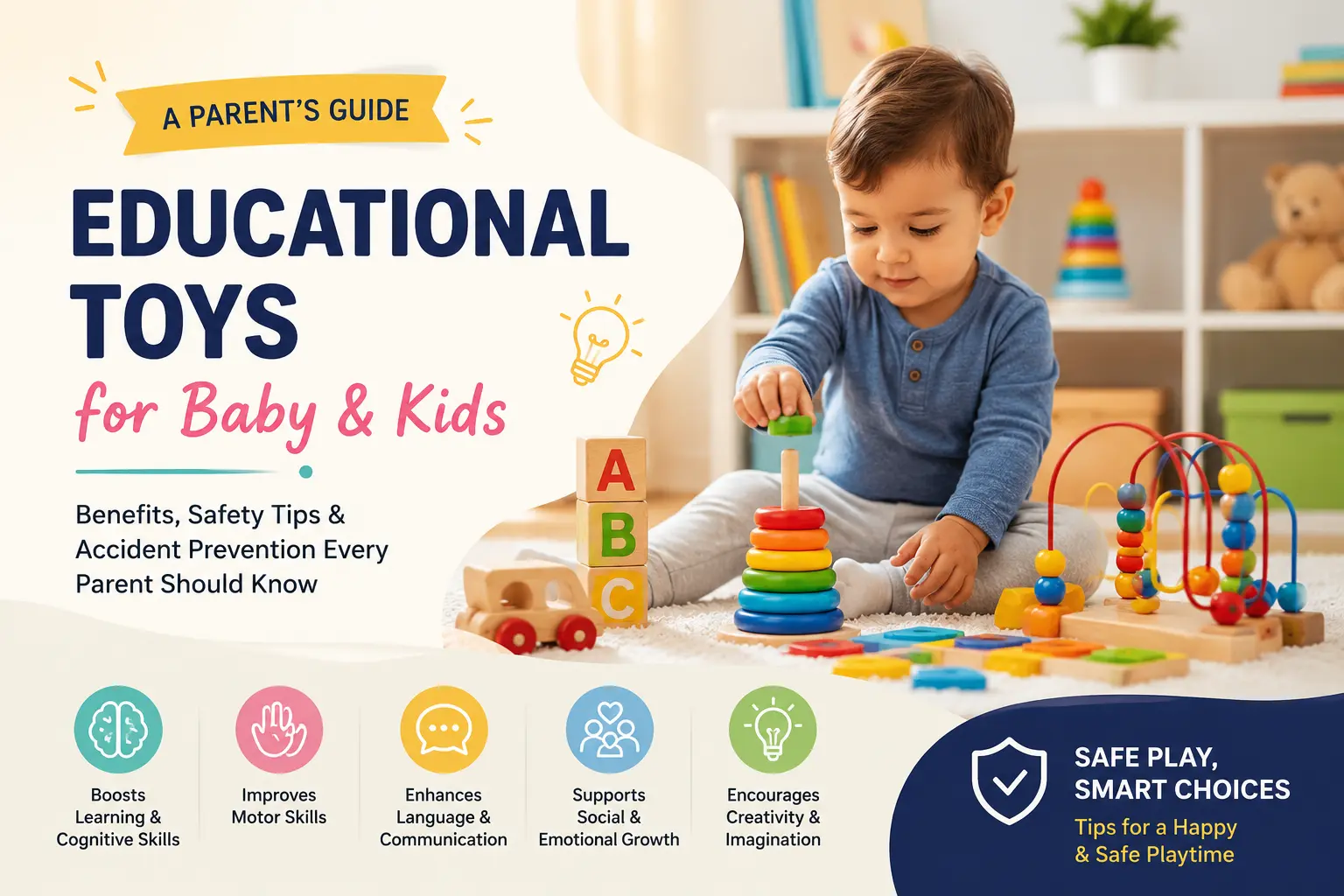
In a child’s early years, play is more than just fun—it is how children explore the world, build skills, and develop confidence. Educational toys are designed to support this natural learning process by combining play with purposeful development. For parents, choosing the right toys can make a meaningful difference in a child’s growth.
Why Should Parents Consider Educational Toys?
Educational toys help children learn through hands-on experience. Unlike passive activities such as watching screens, these toys encourage active thinking, problem-solving, and creativity. When children touch, stack, match, build, or pretend, they are strengthening both their minds and bodies.
Key reasons parents choose educational toys:
- They support learning through play, which feels natural and enjoyable for children
- They help children develop essential skills early in life
- They encourage curiosity, independence, and confidence
- They can grow with the child, offering long-term value
Benefits of Playing with Educational Toys
1. Cognitive Development
Educational toys improve thinking skills such as memory, concentration, and problem-solving. Puzzles, shape sorters, and building blocks help children understand patterns, cause-and-effect, and logical thinking.
2. Motor Skill Improvement
Toys that involve grasping, stacking, pushing, or pulling strengthen fine and gross motor skills. These skills are important for everyday tasks like writing, buttoning clothes, and physical coordination.
3. Language and Communication Skills
Toys with letters, numbers, pictures, or storytelling elements help children learn new words and express ideas. Playing with others also encourages conversation and social interaction.
4. Emotional and Social Growth
Role-play toys such as kitchens, dolls, or tool sets help children understand emotions, cooperation, and empathy. They learn how to share, take turns, and manage feelings through play.
5. Creativity and Imagination
Open-ended toys allow children to invent their own stories and solutions. This builds creativity, confidence, and flexible thinking—skills that are valuable throughout life.
What Parents Should Be Aware of Before Letting Children Play
Not all toys are suitable for every age. Parents should consider safety, quality, and developmental appropriateness before buying or introducing a toy.
Important things to check:
- Age recommendation: Always follow the manufacturer’s age guidelines
- Material quality: Choose non-toxic, BPA-free, and child-safe materials
- Durability: Toys should not break easily or create sharp edges
- Complexity: Toys should match the child’s developmental level—not too hard or too simple
Accident Prevention: How to Keep Playtime Safe
Children learn best in a safe environment. Here is a practical checklist to help prevent accidents:
Accident Prevention Tips
- Avoid toys with small parts for babies and toddlers (choking risk)
- Regularly inspect toys for broken pieces or loose parts
- Keep batteries, magnets, and cords out of reach
- Supervise playtime, especially for younger children
- Store toys properly to prevent tripping or falling
- Teach children how to use toys correctly and gently
- Clean toys regularly to prevent germs and infections
- Avoid toys with sharp edges, long strings, or loud noises
Educational toys are powerful tools that support a child’s learning, creativity, and overall development. When chosen wisely and used safely, they help children grow smarter, stronger, and more confident—all while having fun. For parents, investing in educational toys is not just about buying a product; it is about creating meaningful learning experiences that shape a child’s future.